
API Design terms
A well-designed API is a pleasure to integrate; a poorly designed one is a tax on every team that touches it. This category covers REST principles, GraphQL, versioning strategies, authentication patterns, rate limiting, idempotency, error responses, and the design decisions that make APIs intuitive, stable, and a joy to build against.
More on API Design
History
API design emerged as a formal discipline in the early 2000s as web services and distributed systems became central to software architecture. The REST architectural style, introduced by Roy Fielding in his 2000 doctoral dissertation, provided foundational principles for designing HTTP-based APIs that prioritized statelessness and resource-oriented design. Early best practices focused on URL structure and HTTP method semantics, but matured considerably as companies like Amazon, Google, and Stripe published their public APIs and documented real-world challenges around versioning, authentication, and error handling. The 2010s brought standardized practices like semantic versioning, rate limiting strategies, and comprehensive documentation tools, while GraphQL's 2015 open-source release sparked renewed debate about query flexibility versus REST's simplicity. Today, API design balances multiple concerns—developer experience, backward compatibility, security, performance, and interoperability—with established patterns for pagination, idempotency, webhook design, and contract testing becoming industry standards.
Key concepts
- REST Architectural Constraints
- API Documentation
- API Versioning
- API Error Handling
- API Authentication Patterns
- API Pagination Patterns
- API Rate Limiting
- API Backwards Compatibility
Best references
-
GraphQL Official Specification and Documentation Canonical GraphQL specification maintained by the GraphQL Foundation. Authoritative reference for schema design, subscriptions, and the complete GraphQL query language.
-
RFC 7231: Hypertext Transfer Protocol (HTTP/1.1) Semantics and Content IETF standard defining HTTP semantics, status codes, and content negotiation. Critical reference for HTTP-based API design, error handling, and protocol correctness.
-
OpenAPI Specification (formerly Swagger) Industry standard for documenting and designing REST APIs. Covers API contracts, request/response schemas, and serves as foundation for API documentation and contract testing.
-
gRPC Documentation Official gRPC documentation covering Protocol Buffers, service design, and streaming patterns. Essential for understanding gRPC as an alternative to REST and GraphQL.
-
Web API Design: Best Practices (Apigee) Foundational guidance on practical API design including versioning, error handling, pagination, and authentication patterns from a leading API platform provider.
Typed relationships here
Edges touching a API Design term.
- API Error Handling Often seen in API Documentation 4d
- API Deprecation Often seen in API Documentation 5d
- API Contract Testing Enforces API Backwards Compatibility Jun 14
- Webhook Design Leverages API Authentication Patterns Jun 9
- HTTP Content Negotiation Often seen in API Design Principles Jun 8
 API Backwards Compatibility
1
API Backwards Compatibility
1
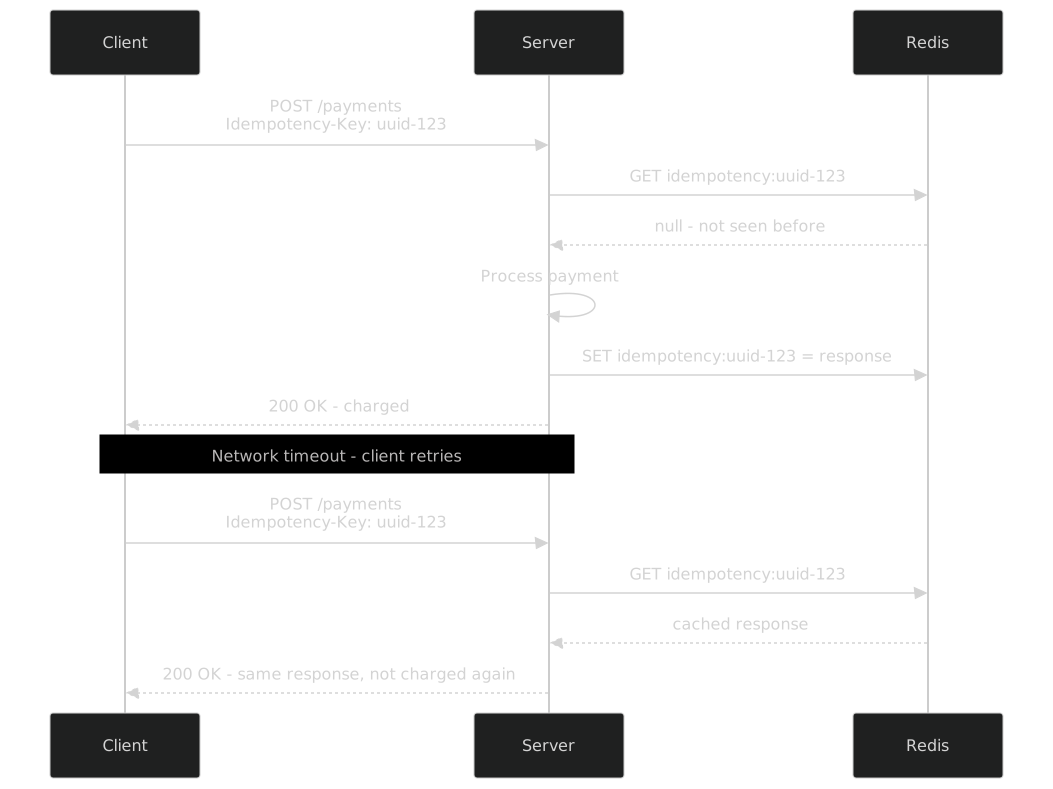 API Idempotency Keys
PHP 7.0+
API Idempotency Keys
PHP 7.0+  API Deprecation
1
API Deprecation
1
 API Error Handling
1
API Error Handling
1
 API Pagination Patterns
 API Rate Limiting