
Networking terms
Every web request, API call, and database query travels through a network. This category covers protocols like TCP/IP, HTTP, WebSockets, and gRPC, alongside concepts like DNS resolution, load balancing, TLS handshakes, and network latency. Understanding how data moves between systems is essential for building reliable, performant distributed applications.
More on Networking
History
Networking in software development emerged from ARPANET's creation in the late 1960s, which pioneered packet-switching and laid groundwork for TCP/IP protocols standardized in the 1980s. The World Wide Web's introduction by Tim Berners-Lee in 1989–1991 established HTTP as the dominant application protocol, making network communication central to software engineering. Through the 1990s and 2000s, web developers focused on request-response cycles and stateless HTTP design, while SSL/TLS security became essential for protecting data in transit. Modern networking practice evolved to address real-time communication (WebSockets, Server-Sent Events), content delivery optimization (CDNs, HTTP/2), and authentication standards (OAuth 2.0, OpenID Connect), reflecting the shift toward distributed systems, microservices, and mobile-first architectures. Today, networking knowledge is fundamental to backend, frontend, and DevOps roles, encompassing protocol selection, latency optimization, security, and infrastructure patterns like load balancing and reverse proxying.
Key concepts
- TCP/IP Model
- HTTP Request-Response Cycle
- HTTP Methods — Idempotency & Safety
- HTTP Status Codes
- DNS Resolution
- TCP vs UDP
- SSL/TLS Certificate Types
- CORS
Best references
-
RFC 9110: HTTP Semantics The authoritative specification for HTTP methods, status codes, and request-response semantics. Essential for understanding HTTP fundamentals covered in multiple category terms.
-
RFC 6749: The OAuth 2.0 Authorization Framework The official specification for OAuth 2.0. Canonical reference for authentication and authorization flows.
-
RFC 8446: TLS 1.3 The current TLS specification covering the handshake process, certificate types, and encryption. Directly relevant to SSL/TLS terms in this category.
-
MDN Web Docs: HTTP Comprehensive, well-maintained reference for HTTP methods, status codes, CORS, and the request-response cycle with practical examples.
-
High Performance Browser Networking by Ilya Grigorik Free online book covering latency, bandwidth, TCP/IP, DNS, CDNs, and WebSockets. Excellent for understanding performance implications of networking concepts.
-
RFC 1035: Domain Names — Implementation and Specification The foundational specification for DNS, covering DNS record types and resolution processes.
Typed relationships here
Edges touching a Networking term.
- Headers Already Sent Error Often seen in HTTP Request-Response Cycle 2d
- HTTP/2 Server Push & Early Hints Often seen in HTTP Request-Response Cycle Jun 14
- HTTP/2 Server Push & Early Hints Alternative to Preload, Prefetch & Preconnect Jun 13
- Swoole / OpenSwoole Realizes WebSocket Protocol Jun 10
- WebSockets Realizes WebSocket Protocol Jun 9
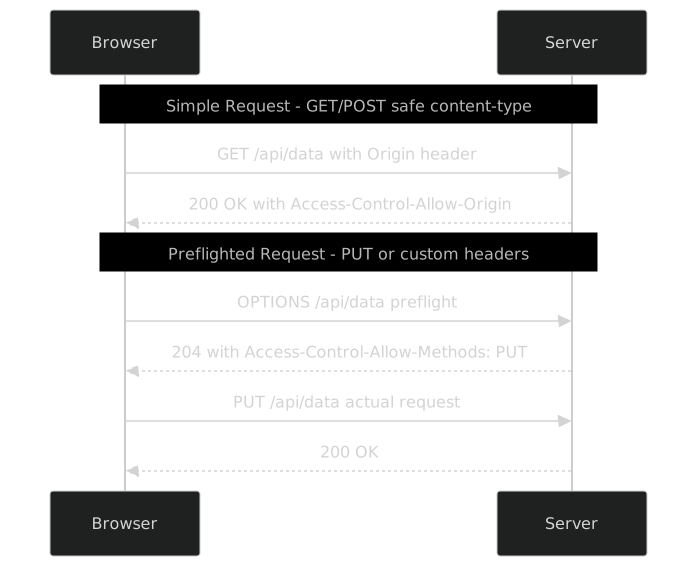 CORS
PHP 5.0+
CORS
PHP 5.0+  DNS Record Types
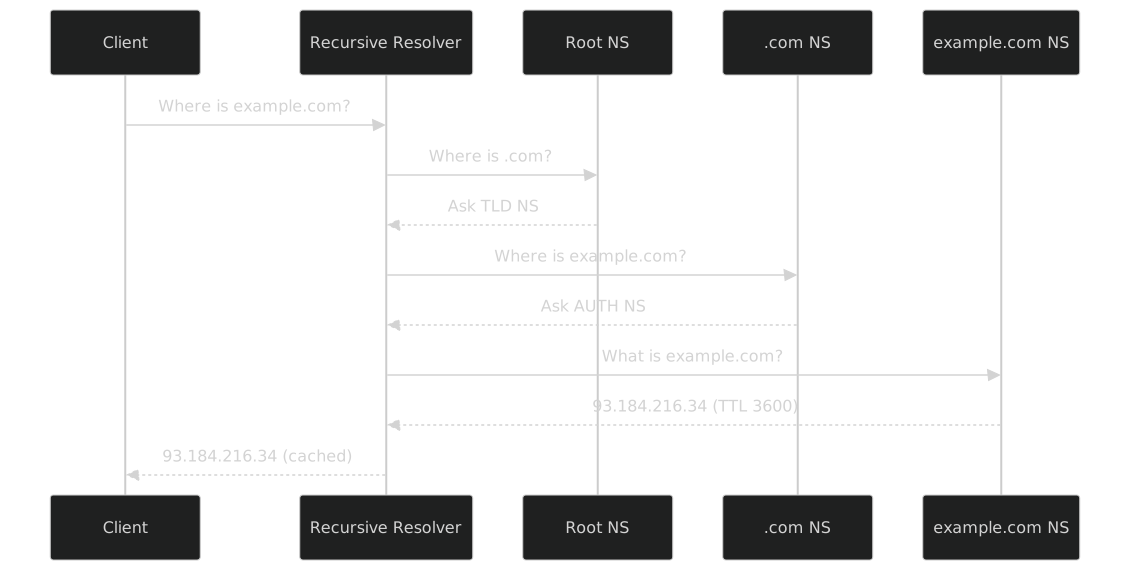 DNS Resolution
1
DNS Resolution
1
 Email Deliverability
PHP 5.0+
Email Deliverability
PHP 5.0+  HTTP Methods — Idempotency & Safety
 IPv6 for Web Developers
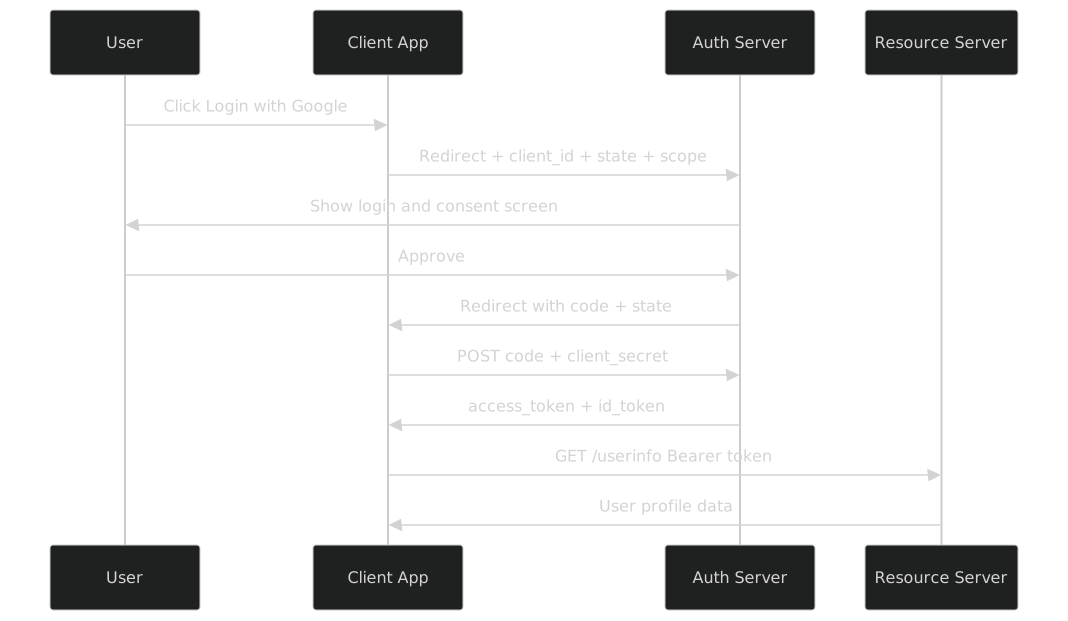 OAuth 2.0
PHP 7.0+
1
OAuth 2.0
PHP 7.0+
1
 Reverse Proxy vs Load Balancer
 TCP/IP Model
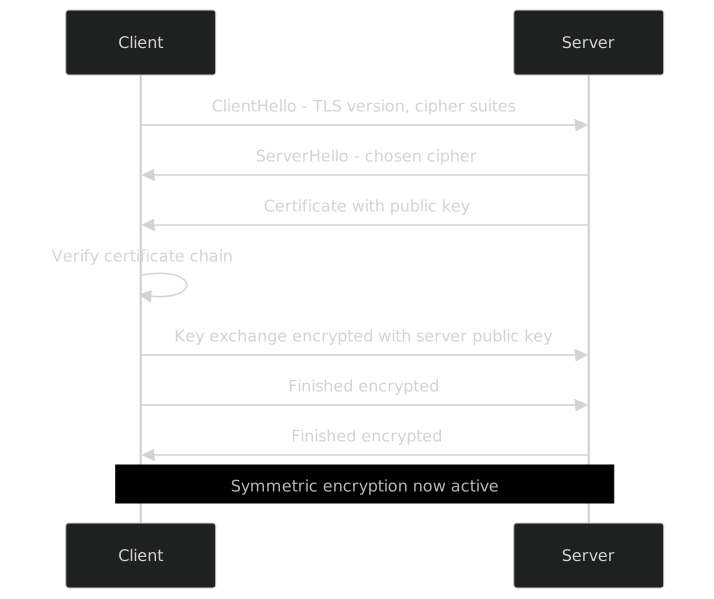 TLS Handshake
2
TLS Handshake
2
 WebSocket Protocol
PHP 7.0+
5
WebSocket Protocol
PHP 7.0+
5